Key Takeaways & Essential Logistics (TL;DR)
- Strict Anti-Lifting Law: It is a criminal offense under the Cayman Islands National Conservation Act to lift any stingray or starfish out of the water. Violations carry fines up to CI$500,000 (~$600,000 USD).
- Barefoot Wading Rule: Wearing water shoes, sandals, or reef booties in water shallower than 4 feet inside the Wildlife Interaction Zone is prohibited to protect buried rays from foot injuries.
- Approved Feeding Only: Southern stingrays may be fed only thawed squid or ballyhoo provided by licensed boat captains. Feeding bread, crackers, or human snacks is strictly banned.
- Shark Safety Protocol: If a nurse shark or reef shark enters the interaction area, all feeding must cease immediately and all food must be removed from the water.
I’m Captain Dave. Over my quarter-century guiding visitors across the North Sound, I have watched the Stingray Sandbar evolve from an unregulated frontier into one of the most carefully monitored marine reserves on the planet.
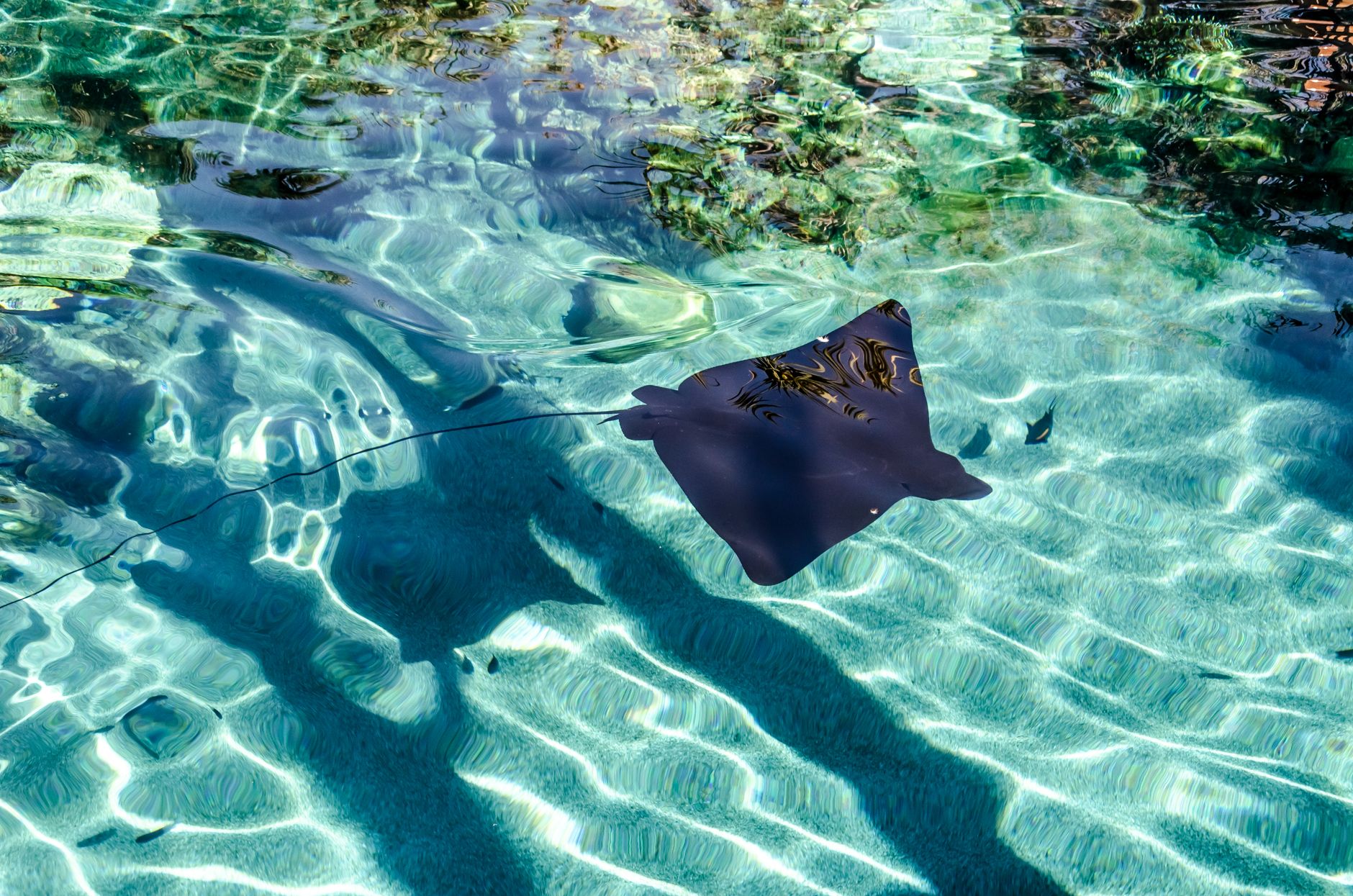
The southern stingrays (Hypanus americanus) you encounter here are completely wild marine animals. They are not captive, they are not drugged, and they do not live inside an enclosure. They gather at the sandbar because decades of respectful human interaction and supplemental squid feedings have taught them to associate boat engines with an easy meal.
However, protecting these gentle creatures requires strict adherence to Cayman law. Following an incident in October 2026 where illegal fish feeding outside designated zones led to predator bites off Governor’s Beach, the Cayman Islands Department of Environment (DoE) and the National Conservation Council (NCC) have intensified enforcement across all tour operators.
Here are the legal requirements, safety rules, and ethical etiquette you must follow when entering the water.
1. The 6 Non-Negotiable Wildlife Interaction Zone (WIZ) Laws
Under the National Conservation Act and Marine Parks Regulations (Reg. 7 & Reg. 20), the Stingray Sandbar is designated as an official Wildlife Interaction Zone (WIZ). Within this zone, the following regulations are strictly enforced by marine patrol officers:
Law 1: Never Lift a Stingray Out of the Water
This is the single most violated rule by inexperienced tourists and rogue operators.
- The Biology: Stingrays breathe through specialized openings behind their eyes called spiracles, which draw oxygenated water across their gills on the underside. Lifting a ray into the air collapses its gill filaments, induces severe respiratory distress, and strains its heavy internal organs against gravity.
- The Legal Consequence: Lifting any ray so that its spiracles, mouth, or gills breach the surface is legally classified as “taking” or harming a protected species under Section 34 of the National Conservation Act. It carries criminal penalties of up to CI$500,000 in fines, up to 4 years imprisonment, or both.
Law 2: No Gripping, Squeezing, or “The Tourist Back Massage”
Under revised NCC guidance notes, the following physical handling techniques are explicitly prohibited:
- Gripping the outer edges of pectoral wings to immobilize the animal.
- Flipping the ray upside down or twisting its body.
- Touching the central dorsal or ventral ridge.
- Performing the tourist “back slap” or kneading massage popularized by social media videos.
- Wrapping arms around the ray in a “bear hug.”
Law 3: The Barefoot Sandbar Rule
Boats anchor in 3 to 4.5 feet of water over fine carbonate sand.
- The Rule: If you are in water shallower than 4 feet inside the WIZ, you must be completely barefoot. Hard water shoes, diving booties, rubber flip-flops, and sports sandals are strictly prohibited.
- Why Barefoot? Stingrays often camouflage themselves by fluttering sand over their bodies, leaving only their eyes and tail barb exposed. If you wade barefoot, you can immediately feel a ray beneath your sole and step off without harming it. If you wear hard rubber shoes, you risk stepping heavily on a ray’s delicate wing cartilage or triggering a defensive barb strike.
Law 4: The “Stingray Shuffle” Wading Technique
When walking across the sandbar, never pick your feet up and stomp. Instead, slide your feet forward along the top layer of sand.
- Sliding your feet kicks up a small wake of sand that gently nudges buried rays to swim away.
- It prevents you from accidentally coming down directly on top of a resting ray’s tail barb.
Law 5: Approved Diet Only (Squid & Ballyhoo)
Only licensed commercial captains holding annual DoE WIZ Tourist Boat Permits may distribute food.
- Approved Bait: Rays may be fed only clean, thawed squid or ballyhoo pieces.
- Banned Food: Feeding bread, hot dogs, chicken, crackers, or processed snacks is strictly illegal and causes acute gastrointestinal disease in elasmobranchs.
- Feeding Technique: If your captain hands you a piece of squid, tuck your thumb flat against your hand, form a loose fist with the bait protruding slightly, and extend your hand below the ray’s snout. The ray’s mouth – located on its underside – will vacuum the squid with powerful suction. Keep your fingers flat so they are not pinched by the ray’s grinding dental plates.
Law 6: The Strict Shark Protocol
Nurse sharks (Ginglymostoma cirratum) and occasional Caribbean reef sharks frequent the North Sound barrier reef.
- If a shark approaches the boat or sandbar, all feeding must immediately stop.
- All remaining squid must be secured inside onboard coolers. Feeding a shark anywhere in the Cayman Islands carries a mandatory statutory fine of up to CI$500,000 under Section 34(f) of the National Conservation Act.
2. Starfish Point Specific Regulations
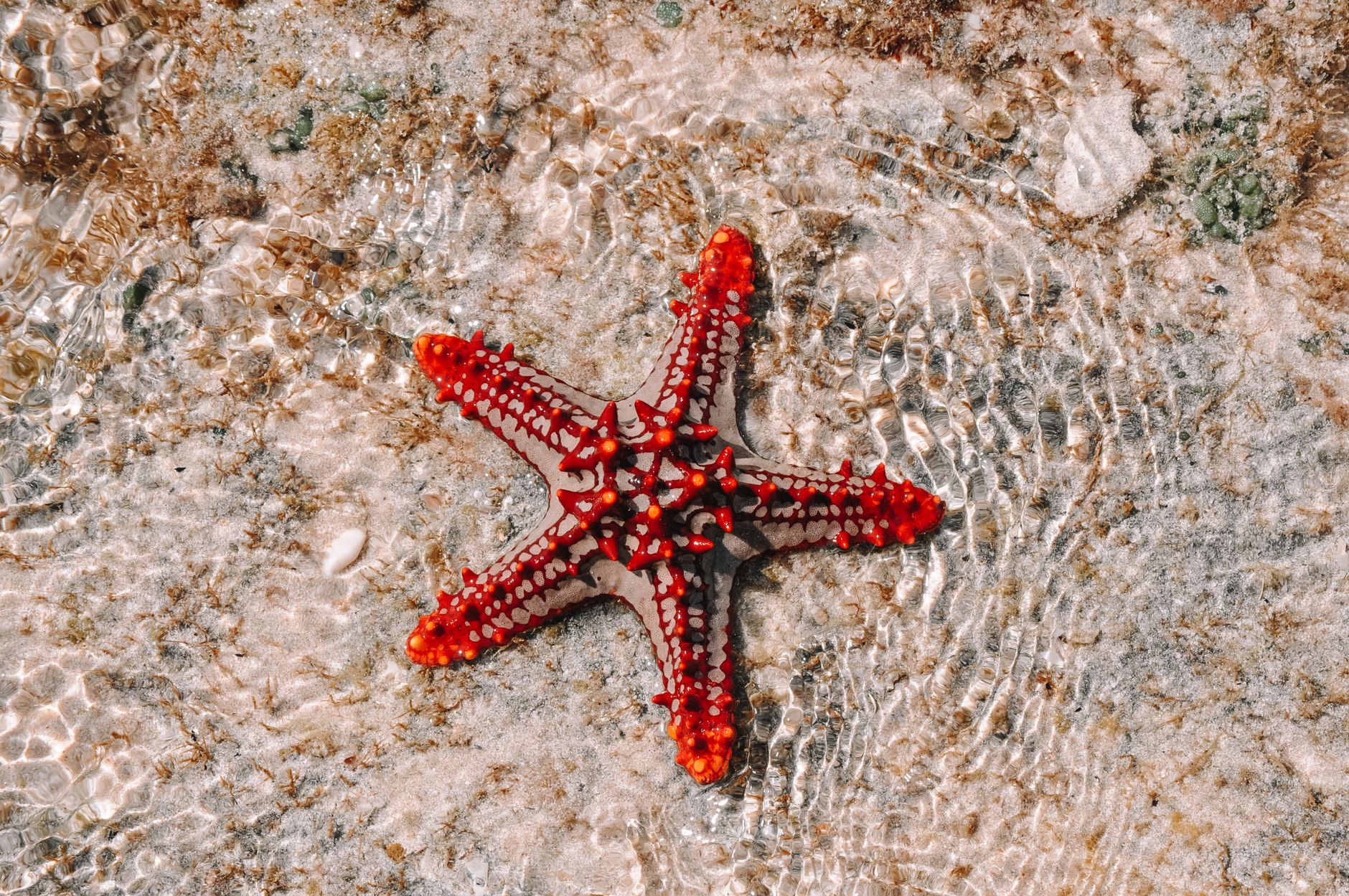
Most 3-stop catamaran tours combine the Stingray Sandbar with a visit to Starfish Point (Water Cay WIZ) near Kaibo. Red cushion sea stars (Oreaster reticulatus) thrive here in shallow, sunlit seagrass beds.
The Underwater Holding Rule
- Holding Allowed Under Water: You may gently cradle a starfish flat in both open hands provided the starfish remains completely submerged underwater at all times.
- Zero Air Exposure: Lifting a sea star into the air – even for a five-second selfie – causes air bubbles to enter its hydraulic vascular system, disrupting its internal water vascular channels and suffocating the animal.
- Prohibited Actions: Never stack starfish on top of each other, never bury them in sand, and never touch them with sunscreen-covered hands. Always apply reef-safe mineral sunscreen at least 30 minutes before entering the water.
3. Do Stingrays Bite or Sting? Debunking the Myths
As a boat captain, I see the hesitation in visitors’ eyes every morning. Television broadcasts have created an exaggerated fear of stingrays. Let’s look at the anatomical facts:
The Defensive Barb (The Sting)
- Location: The venomous spine is located near the base of the tail, approximately 4 to 8 inches back from the body disc. It is not on the tip of the tail, and stingrays cannot “aim” or fire it like a scorpion.
- Trigger: The spine is a purely defensive mechanism used to escape predator jaws (like tiger sharks or hammerheads). A ray will only lash its tail if it is aggressively pinned to the seabed or stepped on with crushing force.
- The Sandbar Reality: The resident rays at Stingray City have interacted with hundreds of thousands of swimmers over four decades. Because visitors shuffle their feet and treat them with gentle flat hands, accidental stings on the sandbar are extraordinarily rare (averaging less than one minor incident per several million visitor interactions).
Do They Bite?
Southern stingrays do not have sharp cutting teeth like sharks. Instead, they have two hard, flat cartilage plates designed for grinding mollusks, clams, and crustaceans.
- If you hold squid with fingers curled outward, a ray’s suction mouth may accidentally give you a “hickey” or light pinch against your skin.
- Always hold bait with your thumb tucked in and palm flat, and allow the ray’s vacuum action to slide the squid smoothly into its mouth.
Red Flags & What to Avoid at Stingray City
- Unlicensed “Pirate” Operators: Cayman law requires every commercial vessel entering the WIZ to display an official DoE WIZ Tourist Boat decal on its hull. Unlicensed boats lack liability insurance, carry untrained crews, and face immediate seizure by marine police. All tours featured on our guide hold active, verified DoE permits.
- Rogue “Photo Pros” Demanding Cash: On crowded days, freelance photographers on private boats sometimes approach visitors, lift a ray, hand it to you, take a photo, and demand $40 cash. Decline immediately. Participating in lifting an animal makes you legally complicit in a wildlife violation.
- Wearing Chemical Sunscreens: Standard oxybenzone and octinoxate sunscreens bleach coral heads at Coral Gardens and irritate stingray skin. The Cayman Islands strongly advocates mineral non-nano zinc oxide sunblocks.
4. Reporting Violations & Wildlife Emergencies
If you observe an operator or visitor dragging a ray out of the water, stepping on sea stars, or dumping unauthorized food in the lagoon, you can report it directly to the authorities:
- Cayman Islands Department of Environment (DoE):
- Marine Enforcement WhatsApp / Phone: +1 (345) 916-4271
- Official Email: DoE@gov.ky
- Headquarters: 580 North Sound Road, George Town, KY1-1102
5. Frequently Asked Questions About Stingray City Rules
Can children and elderly visitors safely enter the water?
Can I wear my prescription glasses or sunglasses in the water?
Are pregnant women allowed on Stingray City tours?
Can I bring my personal underwater camera or GoPro?
Compare Responsible, DoE-Permitted Tours
Review our full breakdown of vetted tour operators who strictly practice ethical wildlife handling:
📊 1. Verified 2026 Excursion Comparison Matrix
Compare Grand Cayman's top-rated, licensed fleet—vetted for small passenger counts, senior-friendly boarding staircases, transparent pricing, and guaranteed on-time cruise return.
 🏆 #1 Bestseller
Stingray City Experience + 2 Snorkel Stops
- ⏱ Duration: 3.0 Hours
- 🚤 Vessel: Motor Catamaran (40–45 pax)
- 📍 Stops: Sandbar + Coral Gardens + Reef
- 🚌 Port Transfer: Included from George Town Port
- 🤿 Snorkel Gear: Mask, snorkel, vests & squid bait
- 🪜 Boarding: Wide stern stairs with handrails
 ⭐ Classic 3-Stop
Sandbar, Starfish Point & Reef Sailing Catamaran
- ⏱ Duration: 3.5 Hours
- ⛵ Vessel: 65-ft Sailing Catamaran with sun nets
- 📍 Stops: Sandbar + Starfish Point + Coral Reef
- 🚌 Port Transfer: Included from Royal Watler Gate
- 🤿 Snorkel Gear: Premium snorkel set, punch & water
- 🪜 Boarding: Gentle staircase into the water
 💰 Best Value
Stingray & Starfish with Snorkel Adventure
- ⏱ Duration: 3.5 Hours
- 🚤 Vessel: Power Cruiser (Max 45 pax)
- 📍 Stops: Sandbar + Starfish Point + Coral Reef
- 🚌 Port Transfer: Included from George Town Port
- 🤿 Snorkel Gear: Standard snorkel gear & life vests
- 🪜 Boarding: Standard swim ladder with rails
 🌿 Small Group Eco
Boutique Sandbar & Coral Snorkel (Max 16 Guests)
- ⏱ Duration: 3.5 Hours
- 🚤 Vessel: Boutique Cruiser (Capped at 16–20)
- 📍 Stops: Sandbar + Starfish Point + Coral Gardens
- 🚌 Port Transfer: Included from Port & SMB Hotels
- 🤿 Snorkel Gear: Sanitized gear & personal floatation
- 🪜 Boarding: Dedicated in-water crew assistance
🏆 #1 Bestseller Excursion
Stingray City Experience + 2 Snorkeling Stops
⭐ Classic 3-Stop Adventure
Sandbar, Starfish Point & Reef Sailing Catamaran
💰 Best Value Choice
Starfish and Stingray City Adventure with Snorkeling
🌿 Small Group Eco (Max 16 Guests)
Boutique Sandbar, Snorkeling & Starfish Point
Ready to Experience Stingray City Sandbar?
Book an uncrowded 3-stop catamaran tour covering the Stingray Sandbar, Barrier Reef coral snorkeling, and Starfish Point with guaranteed on-time return to George Town Cruise Port.